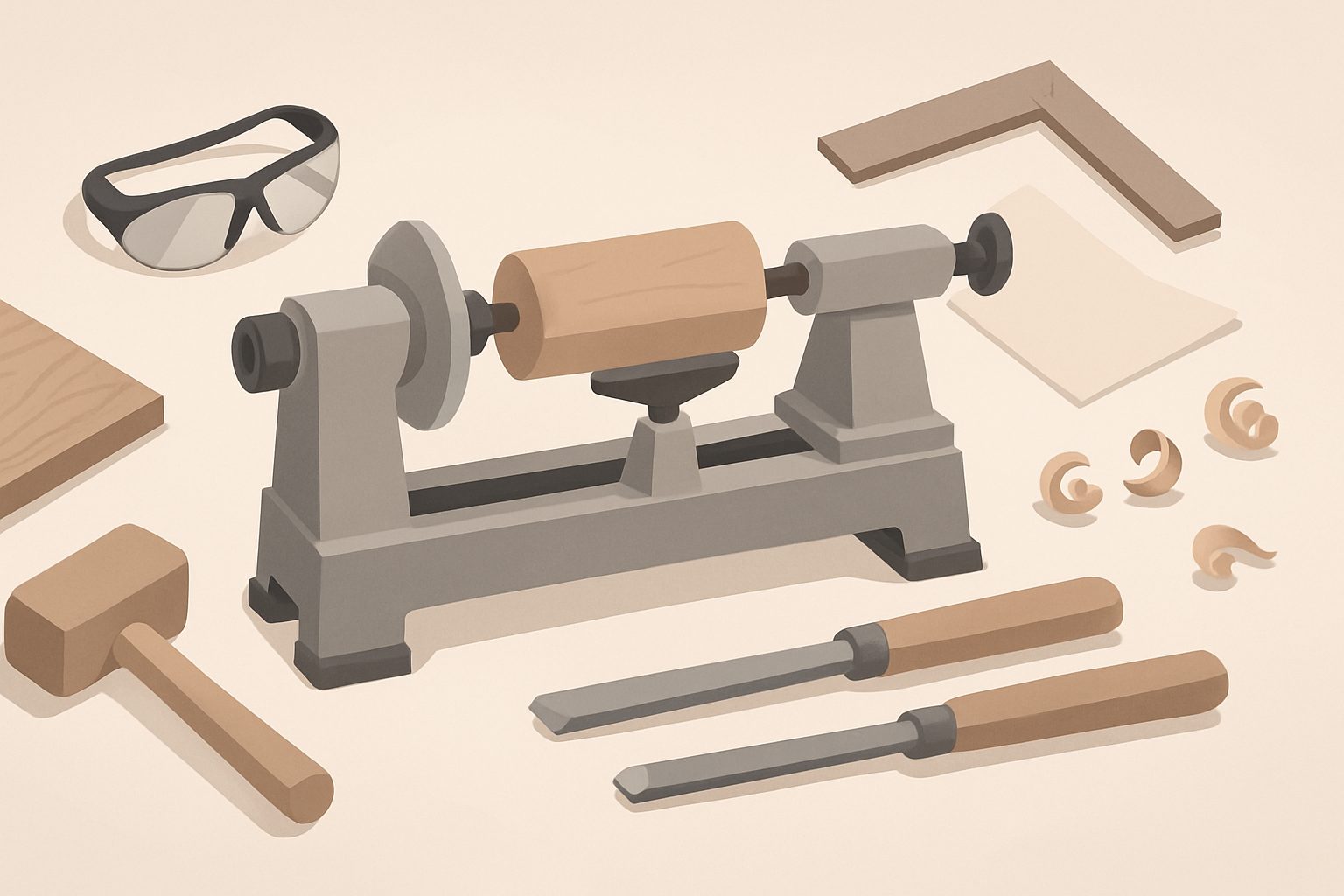
Best Wood Lathes for Pen Turning UK – Precision Picks for Small-Scale Work
Pen turning is deceptively precise work. You're not just shaping timber—you're creating an object that'll pass through someone's hands dozens of times a day, so the finish, weight distribution, and diameter all matter. A full-sized lathe works, but it's overkill. You need something compact, capable of holding a pen mandrel steady, and with enough speed control to handle delicate detail work without vibration.
Why Pen Turning Demands Different Equipment
Standard lathes—particularly larger models designed for spindle turning or bowl work—have swing capacities of 25cm or more and swing heights that leave you hunched over. For pens, you're working with blanks typically 20–25mm in diameter and 75–80mm long. You need a lathe that lets you sit comfortably, feeds power to a mandrel without flex, and holds speed ranges between 1000 and 3000 RPM so you can turn fine detail without tearout.
Midi and mini lathes solve this. They're designed for hobbyists and small projects, they take up minimal bench space, and—crucially—they're rigid enough for pen work. The trade-off is swing capacity (usually 20cm or less), but that's not a limitation here; it's a feature.
What to Look For in a Pen-Turning Lathe
Speed Range
Pen blanks are small-diameter work. At 3000 RPM on a 20mm blank, you get good surface speed and clean detail; below 1000 RPM and you're fighting tearout on the top of your cut. Check that a lathe offers variable speed down to at least 500 RPM (for sanding) and up to 3000 RPM minimum. Digital readout is convenient but not essential; mechanical pulley systems work fine if you don't mind changing belts.
Spindle Nose and Mandrel Compatibility
Pen mandrels come in imperial and metric sizes. Most UK turners use 3/8"–1/2" mandrels. Check whether the lathe's headstock is MT2 (Morse Taper 2) or uses a threaded spindle nose. MT2 is standard for mini lathes and lets you use tailstock centres; threaded noses require a chuck. Either works, but MT2 is more versatile for general turning.
Power and Rigidity
A 500W motor is adequate; 750W gives headroom. What matters more is spindle runout—the amount of wobble in the spindle at full speed. Cheaper lathes can run 0.3–0.5mm out; quality midi models sit at 0.1mm or less. At pen scale, runout kills your finish.
Bed Length
Pen blanks are short, so 38–45cm bed length is fine. Longer isn't better here—it just takes up space and offers no advantage.
The Best Pen-Turning Lathes for UK Users
Jet JWL-1015
The Jet is the gold standard for pen turners. It's a midi lathe with a 20cm swing, runs 500W, and covers 500–3200 RPM. The MT2 spindle accepts standard pen mandrels, and the tailstock locks down hard with minimal flex. You'll pay around £1200–1400 new, but it's robust; the headstock casting is solid iron, spindle runout is negligible, and the variable-speed motor is smooth across the range. The main drawback is that it's a long-term investment—not a beginner's entry point—and parts sourcing in the UK can be slow. Still, if you're serious about pen turning, this is the lathe you build a collection around.
Record Power DML305
A genuinely British alternative, built to a good standard and widely stocked in the UK. It sits between the Jet and entry-level models in price (around £800–1000) and capability. The 20cm swing is identical, speed range is 500–2500 RPM, and the build quality is respectable, though you'll notice slightly more spindle runout than the Jet—around 0.15–0.2mm—which is still fine for pen work. The real advantage is availability and after-sales support; Record Power dealers are across the UK, and replacement parts arrive in days. It's a solid, dependable choice if you want British service without paying Jet prices.
Sherline
US-made, modular, and overkill for pure pen turning, but valuable if you want something truly compact or plan to add other tools. Sherline lathes are aluminium, weigh very little, and accept a huge range of accessories. At around £600–800 for a basic model, they're affordable. The spindle runout is tight, and the slow-speed range is excellent for learning. The catch: they're fiddly to set up, assembly takes patience, and they feel light in hand—not inherently a problem, but some turners find them less substantial than cast-iron rivals. They're brilliant for apartment workshops or if space is critical.
Making the Best of a Compact Lathe
Whichever lathe you choose, invest in a quality pen mandrel kit—a two-piece hardened steel mandrel with tapered bushings runs £30–50 and makes setup repeatable. Use a live tailstock centre (MT2, around £25) rather than a fixed one; it reduces pressure on the blank and cuts vibration.
For spindle speeds, start at 1500 RPM for roughing, step up to 2200 RPM for detail work, and drop to 3000 RPM only if your lathe runs cleanly at that speed. Sand progressively from 80 to 400 grit on the lathe itself.
The Takeaway
The Jet JWL-1015 is the pen turner's obvious choice if budget allows. The Record Power DML305 offers practicality and UK support at a lower price. The Sherline works brilliantly for space-constrained workshops. All three will produce professional pen finishes; your choice depends on budget, bench space, and whether you value British service or American modularity.
More options
- Wood Lathes – General (Amazon UK) (Amazon UK)
- Record Power Wood Lathes (Amazon UK) (Amazon UK)
- Jet Wood Lathes (Amazon UK) (Amazon UK)
- Wood Lathe Chucks & Jaw Sets (Amazon UK) (Amazon UK)
- Woodturning Chisel & Tool Sets (Amazon UK) (Amazon UK)