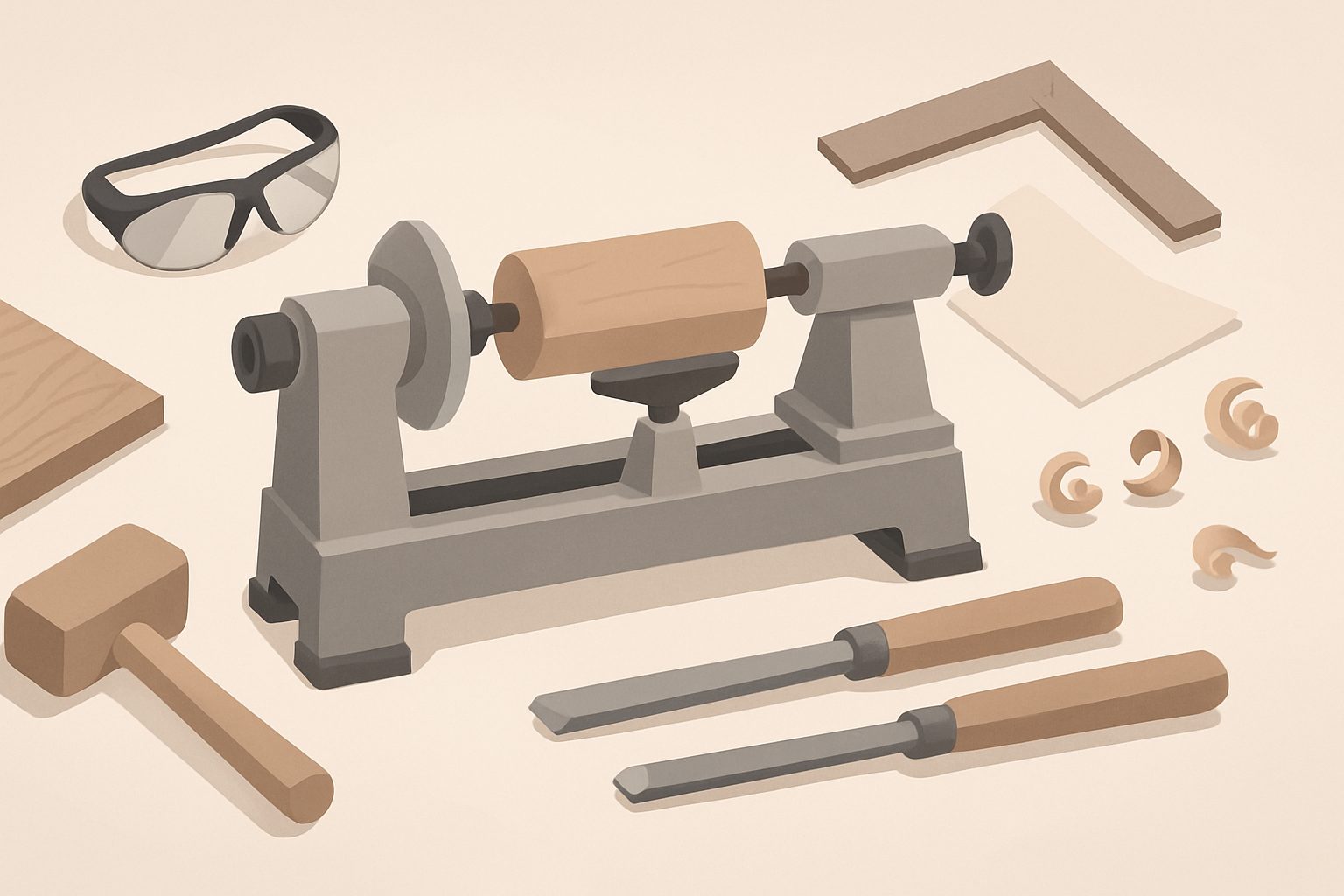
Wood Lathe Safety Tips for Beginners UK – Stay Safe at the Lathe
Wood turning is genuinely rewarding, but a lathe demands respect. These machines spin at significant speeds, and blanks can catch unexpectedly. The good news is that serious incidents are largely preventable if you adopt a few core habits from day one. Here's what actually matters when you're learning to turn.
Personal Protective Equipment
You need the right protective gear before the lathe ever spins. This isn't optional—a lathe can injure you in seconds.
Dust mask or respirator is non-negotiable. Fine wood dust, especially from exotic species, irritates your lungs and accumulates over time. A basic FFP2 mask works for casual turning; if you're working regularly, invest in a powered air-purifying respirator (PAPR). Many UK woodturners find APRs invaluable for comfort during longer sessions.
Eye protection must protect your sides as well as your front. Turning generates splinters and dust at surprising angles. Regular safety glasses aren't sufficient—buy proper turning goggles or a full-face shield. A full-face shield offers better coverage but can feel warm in summer; goggles are lighter but require good fit around the sides.
Hearing protection matters more than beginners realise. A lathe running at 1,000+ RPM produces steady noise that, over time, causes hearing damage. Simple foam earplugs or earmuffs bring it to manageable levels.
Hair and clothing need attention. Tie back long hair completely. Avoid loose sleeves, dangling jewellery, or anything with strings or ties. Wear a shop apron without loose pockets. If something catches the spinning blank, the lathe won't stop—your arm will move faster than you can react.
Securing Your Workpiece Properly
How you mount the blank is as critical as how you hold your tools. A loose or insecurely held blank will come free, and a spinning block of wood becomes a projectile.
For spindle work, ensure your centres sit firmly in both tailstock and headstock. Push the tailstock all the way in by hand first, then tighten the handwheel gradually. It should be snug but not brutally tight; excessive pressure strains the bearings and can actually cause slippage.
For faceplate work, inspect your blank carefully. Knots, grain runout, or stress cracks can give way mid-turn. If you're unsure about the wood's integrity, clamp it in a vice and give it a good shake by hand first. Mount it securely using lag bolts of appropriate length—they should penetrate at least 30–40 mm into solid wood. Undersized or too-short bolts won't hold.
Always rotate your blank by hand after tightening everything and before switching on the lathe. This catches any obstruction and lets you verify that everything clears the tool rest.
Tool-Rest Positioning
Your tool rest is your safety net. Position it correctly, and it prevents the blank from flinging a tool across the workshop. Position it wrongly, and it becomes useless.
The rest should sit roughly level with the lathe centre, maybe 3–5 mm below at most. If it's much higher, tools catch easily; much lower, and you lose control when cutting. Leave no gap between the tool rest and the turning blank—ideally, the gap is less than 3 mm. A larger gap is an accident waiting to happen: a catch can lift a tool into your hand.
Tighten the rest firmly. It should not shift under normal cutting pressure. A loose rest lets the tool drift into the spinning wood, causing a violent catch.
Check the tool rest after every significant interruption. If you step away to adjust the speed or reposition your body, verify the rest is still secure.
Speed Selection
Beginners often run their lathes too fast, which amplifies every mistake.
Large, heavy blanks need slower speeds—start at 500–800 RPM and increase only after you've made light passes. Smaller spindles and bowls can go faster, but even then, 1,200 RPM is often enough when you're learning. The rule is simple: if the blank wobbles visibly, the speed is too high. Slow down.
Always start at your lowest speed. Increase gradually only as you become confident. Running fast doesn't save time if it forces you to start over after a catch.
Your lathe's speed markings guide you, but feel matters more. Listen to the timber. A smooth, steady sound is good. Erratic noise or vibration means something's wrong—stop the lathe and investigate.
Common Beginner Mistakes to Avoid
Don't take your hands off the tool rest during a cut unless you're deliberately retracting. Pressure builds, and if the blank catches, your hands move with it.
Never leave the lathe running while you adjust anything. Stop, wait for the spindle to coast to a complete halt, then adjust the rest, change speed, or fetch a tool.
Don't reach in to adjust or clear something while the lathe is spinning, even slowly. Get your hand nowhere near a rotating blank unless you fully intend to be turning.
Avoid wearing gloves. They can catch and trap your hand against the blank. Your bare hand is faster to pull away than a gloved one.
Summary
Wood turning is safe when you respect the machine's speed and power. Wear your PPE every session without exception. Secure your workpiece properly, position the tool rest correctly, and match the speed to the blank size. Above all, develop the habit of thinking before the lathe starts. These practices become automatic with time, and they're the foundation of a long, uninterrupted woodturning hobby.
More options
- Wood Lathes – General (Amazon UK) (Amazon UK)
- Record Power Wood Lathes (Amazon UK) (Amazon UK)
- Jet Wood Lathes (Amazon UK) (Amazon UK)
- Wood Lathe Chucks & Jaw Sets (Amazon UK) (Amazon UK)
- Woodturning Chisel & Tool Sets (Amazon UK) (Amazon UK)