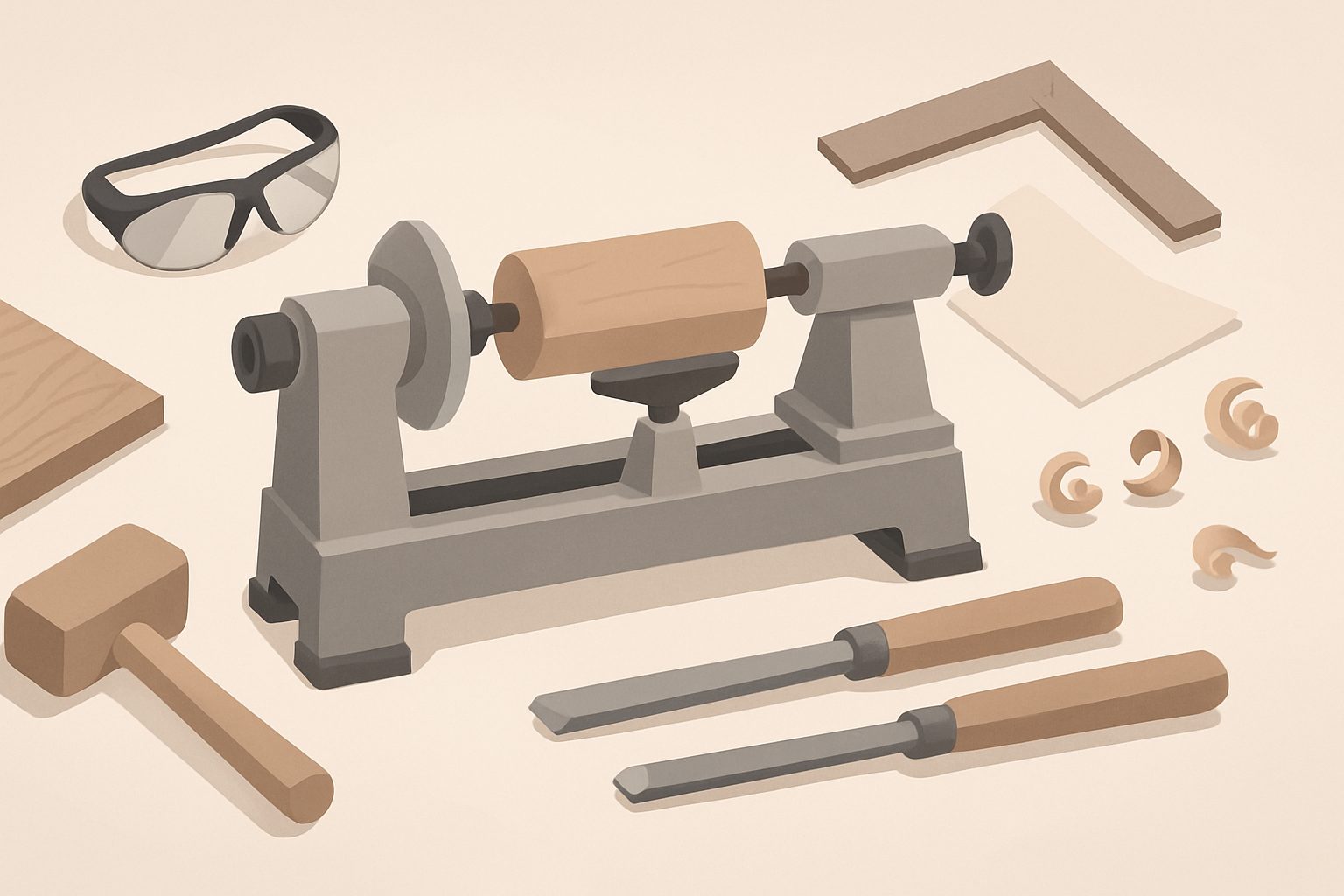
Wood Lathe Upgrade Guide UK – When to Move from Mini to Full-Size
If you've been turning on a mini lathe for a year or two, you've probably hit the moment: a project idea that won't fit, frustration with wobble on anything thicker than a pen, or simply the realisation that you're ready for serious work. Upgrading from a mini to a midi or full-size lathe is a substantial investment, but it's also often the clearest sign that you've genuinely progressed as a turner.
This guide covers the practical signals that it's time to move up, what you'll actually gain at each size, and how to handle your old lathe responsibly without losing money.
When a Mini Lathe Stops Making Sense
Mini lathes—typically 300–500 mm between centres—are brilliant for learning. They're affordable, space-efficient, and forgiving. But they hit hard limits that no amount of technique can overcome.
Size constraints are the obvious one. If you regularly find yourself thinking "I could turn that if it would fit," you've outgrown the machine. Blanks over 100–150 mm in diameter or longer than 300 mm start becoming problems. You'll find yourself discarding wood or redesigning projects, which defeats the purpose of owning a lathe.
Wobble and vibration are the sneakier culprit. Mini lathes have lighter flywheels and less rigid beds. As your technique improves and you take bigger cuts, chatter becomes frustrating rather than instructive. Work between centres is particularly affected; a spindle roughed on a mini lathe might need significant time truing on a better machine.
Speed limitations matter too. Most minis max out around 3,000 rpm. For delicate spindle work and fine details, you need 2,000–2,500 rpm; for bowl blanks and roughing, 500–1,200 rpm works well. But if you're turning larger work, you'll want consistent control across both extremes.
Lack of clearance becomes real as your projects grow. A mini lathe's toolrest height and outboard capacity (if any) are minimal. Turning a bowl over 200 mm diameter is technically possible but clumsy, and you'll have limited options for accessing inside curves.
What Midi Lathes Offer
Midi lathes—typically 900–1200 mm between centres and 300–400 mm outboard capacity—are where many home woodworkers find their sweet spot.
A midi lathe opens up genuine bowl turning, larger spindle work, and more demanding projects without dominating a workshop. You'll have a rigid bed that kills chatter, faster acceleration to full speed, and variable speed motors (usually 500–3,000 rpm) that let you work safely at appropriate speeds.
The toolrest and tailstock feel substantial. Your hands aren't cramped, and you can position tools more intuitively. Outboard turning becomes practical for off-centre work and hollow forms.
In the UK market, quality mids from established makers like Jet, Record, Axminster, and Dewalt start around £1,500–2,500 new, though second-hand finds are common. They're the most popular size for serious hobbyists: big enough to feel like a "real" workshop machine, compact enough to fit in a shed or garage.
Full-Size Lathes: When You Need the Commitment
Full-size floor-standing lathes (1500+ mm between centres, 500+ mm outboard) are a different beast. If you're not selling work, you're rarely justified in owning one.
That said, if you're regularly turning large bowls (300+ mm), doing production work, teaching, or just accept that this is a serious hobby investment, a full-size lathe is liberating. You'll have industrial-grade rigidity, a larger swing, better dust extraction integration, and the ability to handle virtually any blank.
They're also significantly more expensive: £3,000–6,000+ new for decent models. Space is the real limiting factor for most home workshops.
Resale: Getting Fair Value from Your Mini
When you upgrade, your old lathe has real resale value—especially if you've maintained it properly.
Condition matters most. Clean the lathe thoroughly. Test the motor, check runout on the spindle with a dial gauge, and ensure the chuck grips securely. Be honest about wear; buyers can usually tell when corners have been cut.
Pricing: A well-kept mini lathe typically fetches £400–800 used, depending on brand, age, and extras like a chuck, toolrest, and steadies. Niche brands and older Record models sometimes fetch more from collectors. Online marketplaces like eBay, Facebook Marketplace, and specialist woodworking forums are your best channels in the UK.
Bundling helps. Include a basic chuck, good quality toolrest, and a few chisels if you have spares. This signals you've looked after the tool and adds perceived value.
Timing: There's a gentle seasonal dip in winter and a pickup around spring when people plan new hobbies. Don't sit on the listing—a fair price moves fast.
Making Your Decision
Upgrading makes sense when:
- You're regularly running out of capacity (size, speed, or control)
- You've moved beyond learning and into consistent practice
- Your projects are constrained by the machine, not your skill
- You can justify the space and expense
If you're still turning mostly spindles under 100 mm or practising techniques, a mini lathe is still fine—and a good resale opportunity later if you decide to upgrade.
If you're filling a garage and turning serious work, a midi lathe is the practical choice for most UK hobbyists. Full-size is for committed turners with space and budget.
The transition from mini to midi is rarely a regretted upgrade. You'll work faster, with more confidence, and with genuine access to projects you've had to put on hold.
More options
- Wood Lathes – General (Amazon UK) (Amazon UK)
- Record Power Wood Lathes (Amazon UK) (Amazon UK)
- Jet Wood Lathes (Amazon UK) (Amazon UK)
- Wood Lathe Chucks & Jaw Sets (Amazon UK) (Amazon UK)
- Woodturning Chisel & Tool Sets (Amazon UK) (Amazon UK)